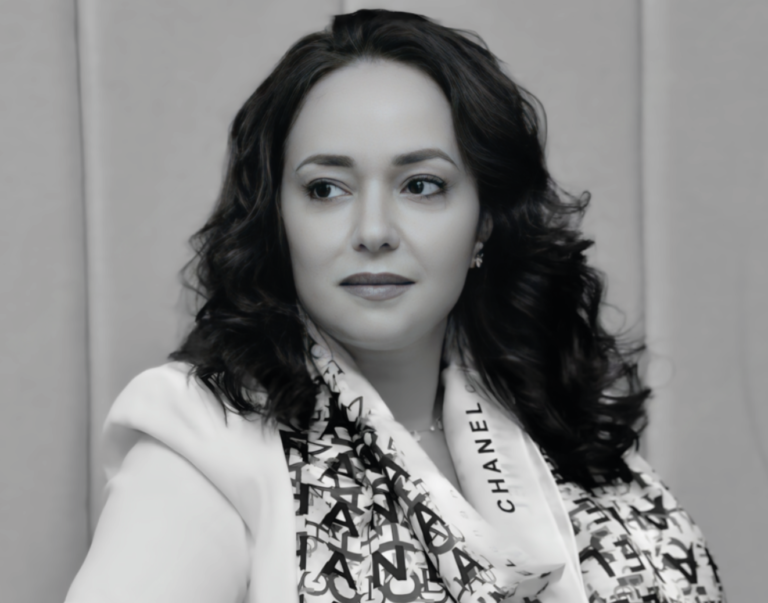
INTERVIEW WITH SHIRI FEIN GROSSMAN – “THE KING HAS MADE THE SOUTHERN PROVINCES A CENTRAL PRIORITY”
What was the role of the late King Mohammed V in protecting Jewish citizens in Morocco, and how did this protection strengthen the ties between Jewish citizens and the Moroccan nation and the Alaouite throne?
During World War II (1940–1942), Morocco was ruled by Vichy France, which introduced the antisemitic ‘Statut des Juifs’. These laws discriminated against Jews by restricting their civil rights, access to certain professions, participation in education, and control over property.
Although Morocco was under the French Protectorate, Sultan Mohammed V still held strong religious and symbolic authority as the “Commander of the Faithful” (Amir al-Mu’minin) for all Moroccans, including both Muslims and Jews.
Mohammed V opposed the Vichy anti-Jewish laws and resisted French pressure to enforce the most severe measures. He repeatedly stated that Moroccan Jews were his “children” and under his personal protection.
Even though he could not legally overturn Vichy decrees, he reduced their impact in several ways. He resisted attempts to force Jews to wear yellow badges, helped prevent large-scale confiscation of Jewish property, and supported efforts to keep Jewish students in school when Vichy officials tried to expel them.
Mohammed V also used public ceremonies to affirm the inclusion of Jews in Moroccan society. For example, he invited rabbis and Jewish community leaders to the Throne Day celebration in 1941, a clear symbolic rejection of Vichy segregation. He consistently emphasized that Jews and Muslims were equally part of the Moroccan nation.
Finally, unlike in some other territories under Vichy control, no Moroccan Jews were deported to Nazi extermination camps.
How did this protection strengthen Jewish–Jewish-Moroccan ties?
Mohammed V’s position during World War II helped strengthen a shared sense of Moroccan national identity. Many Jews increasingly viewed themselves as integral members of the country, protected by the monarchy and involved in the development of a future independent state. Jewish community leaders later recalled this period by saying, “We were all Moroccans under the King’s protection.”
By defending a vulnerable minority, Mohammed V showed strong moral authority and reinforced his religious legitimacy as the protector of all faith communities. His stance also signaled a degree of independence from French pressure. These actions elevated the prestige of the Alaouite monarchy in the eyes of both Muslims and Jews.
After World War II and throughout the struggle for independence, many Jewish leaders supported the nationalist movement. Even after large numbers of Jews emigrated in the decades that followed, many continued to express deep emotional ties to Morocco. Both King Hassan II and King Mohammed VI have repeatedly referred to Mohammed V’s protection of Jews as a foundational part of Morocco’s national narrative of coexistence.
Overall, Mohammed V played a key role in reducing, resisting, and symbolically rejecting the implementation of Vichy France’s antisemitic laws. His actions contributed to the safety of Morocco’s Jewish population, strengthened the bond between Jewish communities and the Moroccan nation, and reinforced the moral and political legitimacy of the Alaouite throne, a legacy of coexistence that remains central to Moroccan identity today.
What is the role of King Mohammed VI in supporting efforts for peace, stability, and security regionally and internationally, as Commander of the Faithful, given that
Morocco has launched the Commandery of the Faithful Peace Institute in Jerusalem?
King Mohammed VI plays an important and active role in supporting peace, stability, and security both regionally and internationally. As “Commander of the Faithful” (Amir al-Mu’minin), his authority extends to all believers, Muslims, Jews, and Christians, giving his initiatives a unique moral and spiritual legitimacy that goes beyond political leadership.
King Mohammed VI’s efforts are guided by Morocco’s long-standing tradition of coexistence and its historical commitment to interreligious harmony. His leadership promotes dialogue, moderation, and rejection of extremism, principles that form the foundation of Morocco’s foreign policy on religious and cultural matters. The King’s approach is based on the idea that spiritual authority can be a force for global peace, not only within Morocco but across the wider region.
The recent launch of the Commandery of the Faithful Peace Institute in Jerusalem is a significant example of this vision. The institute reflects Morocco’s historic role as a bridge between cultures and as a protector of religious heritage, including in the Holy City. It also demonstrates Morocco’s determination to contribute to peace efforts in a region marked by long conflict. By establishing this institution in Jerusalem, a city sacred to the three monotheistic religions, King Mohammed VI signals that peaceful coexistence and interfaith understanding are essential tools for stability.
Internationally, Morocco’s model of a moderate and inclusive Islam, endorsed by King Mohammed VI, has become a reference for many countries seeking strategies to counter radicalization and promote tolerance. This has strengthened Morocco’s role as a partner in global security efforts and widened its influence in Africa, the Middle East, and beyond.
In this broader context, the Commandery of the Faithful Peace Institute stands as a symbol of Morocco’s commitment to a future based on coexistence, understanding, and respect for religious diversity.
What is the significance of Moroccan-American-Israeli relations in supporting development and prosperity programs and creating bridges of trilateral cooperation in various fields regionally and internationally?
Moroccan-American-Israeli relations hold significant value for encouraging development, prosperity, and cooperation across several regions. These relations are not only diplomatic; they represent a strategic framework that connects Morocco with two major partners whose technological, economic, and political resources help advance shared goals of stability and progress.
By strengthening ties with both the United States and Israel, Morocco positions itself as a bridge between North and West Africa, the Middle East, and the wider international community. This role allows the country to encourage programs that advance sustainable development, innovation, and economic growth, while also contributing to regional peace efforts.
In practical terms, partnerships with the United States and Israel enable Morocco to expand cooperation in fields such as agriculture, renewable energy, water management, technology, education, and defense. These initiatives reflect Morocco’s belief that development and stability must go hand in hand, and that shared prosperity can create a solid foundation for peaceful relations between peoples and states. For Morocco, the renewed relations with Israel also carry a historical and cultural dimension, shaped by the deep ties between Moroccan Jews and their country of origin. These ties form a human bridge that strengthens cooperation in culture, tourism, science, and business. When combined with American support and investment capacity, this creates opportunities for trilateral projects that benefit societies across multiple regions.
Internationally, the partnership reinforces Morocco’s role as a reliable and forward-looking actor in global diplomacy. It highlights the Kingdom’s commitment to constructive engagement, dialogue, and partnership-based solutions to regional challenges. The United States, recognizing Morocco’s leadership and stability, often supports Morocco’s efforts to serve as a platform for cooperation between Africa and the Middle East.
Overall, Moroccan-American-Israeli relations carry significant importance for promoting shared prosperity and creating new avenues of collaboration. They reflect Morocco’s vision of building constructive alliances that encourage development, strengthen regional stability, and contribute to a more interconnected and peaceful international environment.
How will the UN Security Council’s decision to adopt autonomy in the Sahara as a realistic solution under Moroccan sovereignty contribute to the prosperity and development of the Saharan regions, and what is the developmental progress that these regions have experienced under the wise royal leadership of His Majesty King Mohammed VI?
The UN Security Council’s growing recognition of autonomy in the Sahara (under Moroccan sovereignty), as a realistic and credible solution supports long-term stability, development, and prosperity in the region.
The Abraham Accords which included the United States’ recognition of Moroccan sovereignty over the Sahara in 2020 played a critical role in the pricess that now has led to this remarkable achievement of the Morrocan diplomatic strategy. The American decision contributed to shaping wider global perceptions of the issue and, from the Moroccan viewpoint, played a role in influencing the positions of several states within the UN system, ultimately helping create a more favourable environment during subsequent votes at the UN Security Council.
Under the wise royal leadership of His Majesty King Mohammed VI the Saharan regions have already experienced significant development over the past two decades. The King has made the southern provinces a central priority, reflected in large-scale investments in infrastructure, renewable energy projects, ports such as Dakhla Atlantique, road networks, healthcare facilities, educational initiatives, and improved housing. These efforts are part of the New Development Model for the Southern Provinces launched in 2015, which promotes job creation, entrepreneurship, and sectoral diversification in fields like fishing, agriculture, tourism, and logistics.
This development process is accompanied by greater regional governance, with locally elected councils granted expanded responsibilities in managing public affairs, in line with the principles of advanced regionalization and the spirit of autonomy. These measures have raised living standards, strengthened social cohesion, and deepened the sense of belonging among local populations.
In this broader context, the Security Council’s recognition of autonomy as a realistic solution—combined with the diplomatic momentum generated by the Abraham Accords and U.S. recognition- supports Morocco’s vision of a stable, prosperous, and well-governed Sahara. Under the leadership of King Mohammed VI, this approach remains a cornerstone of Morocco’s national unity and long-term strategic development.